I've spent a ridiculous number of hours recently researching and testing how businesses are actually being discovered and recommended across Google, ChatGPT and other AI systems.
I started with what seemed like a simple question: how do you determine whether a business is well positioned to be discovered and recommended by AI? It got complicated fast.
The biggest thing I've taken away from the exercise is that we may be framing this incorrectly. AI didn't simply create another marketing channel. It added a new technical layer to the customer discovery system.
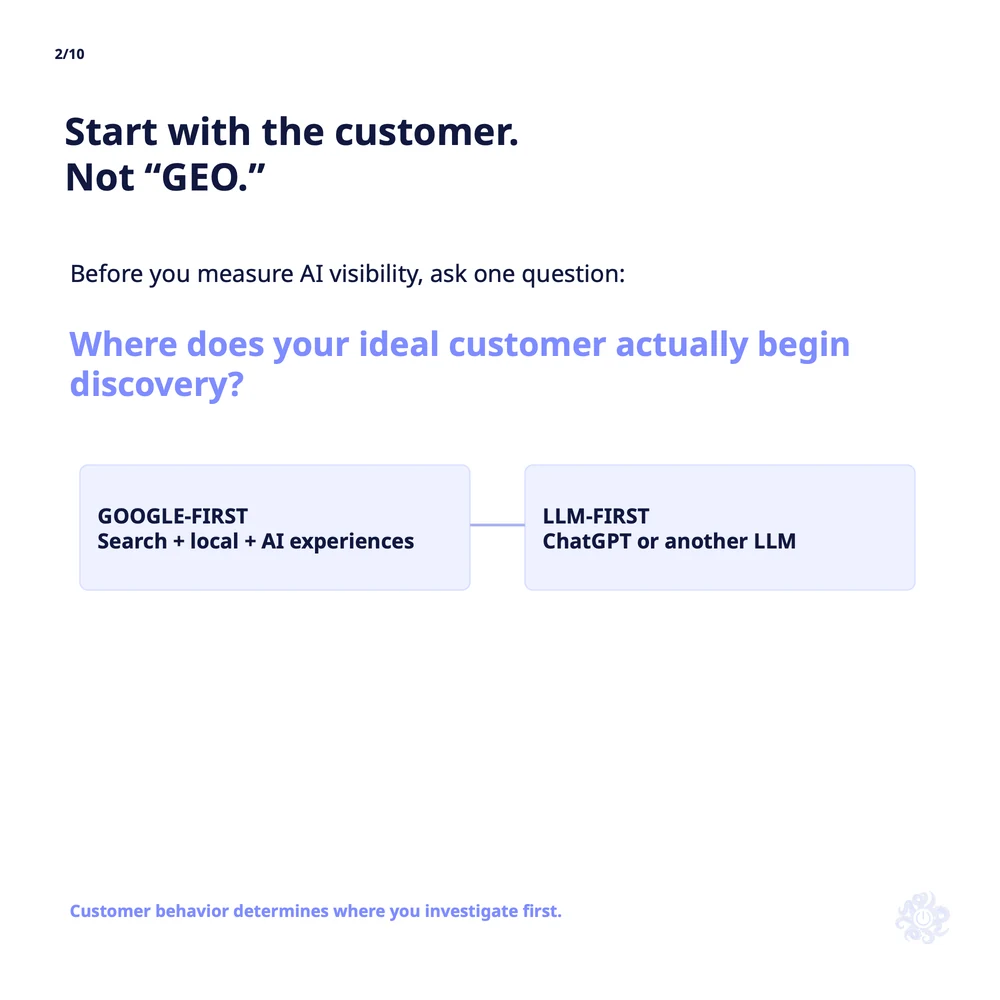
Before businesses start worrying about AEO scores, GEO scores or optimizing for every LLM under the sun, there's a much more fundamental question to answer: does your customer start with Google, with ChatGPT, or somewhere else? Start with where your customers actually begin their search, not with the latest AI marketing acronym.
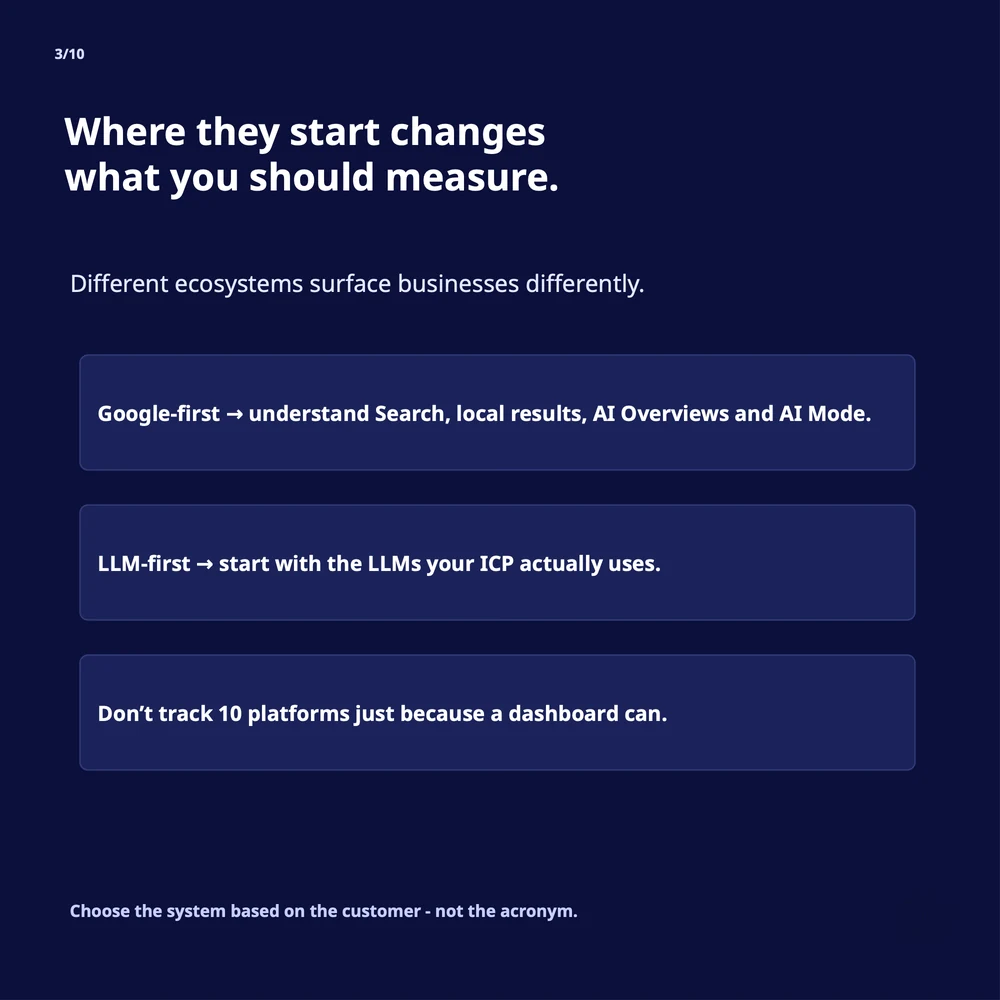
That answer changes what you should measure. If your ideal customer is Google-first, you need to understand Search, local results, AI Overviews and AI Mode. If they're LLM-first, start with the LLMs your ideal customer actually uses. Either way, don't track ten platforms just because a dashboard can. Choose the system based on the customer, not the acronym.
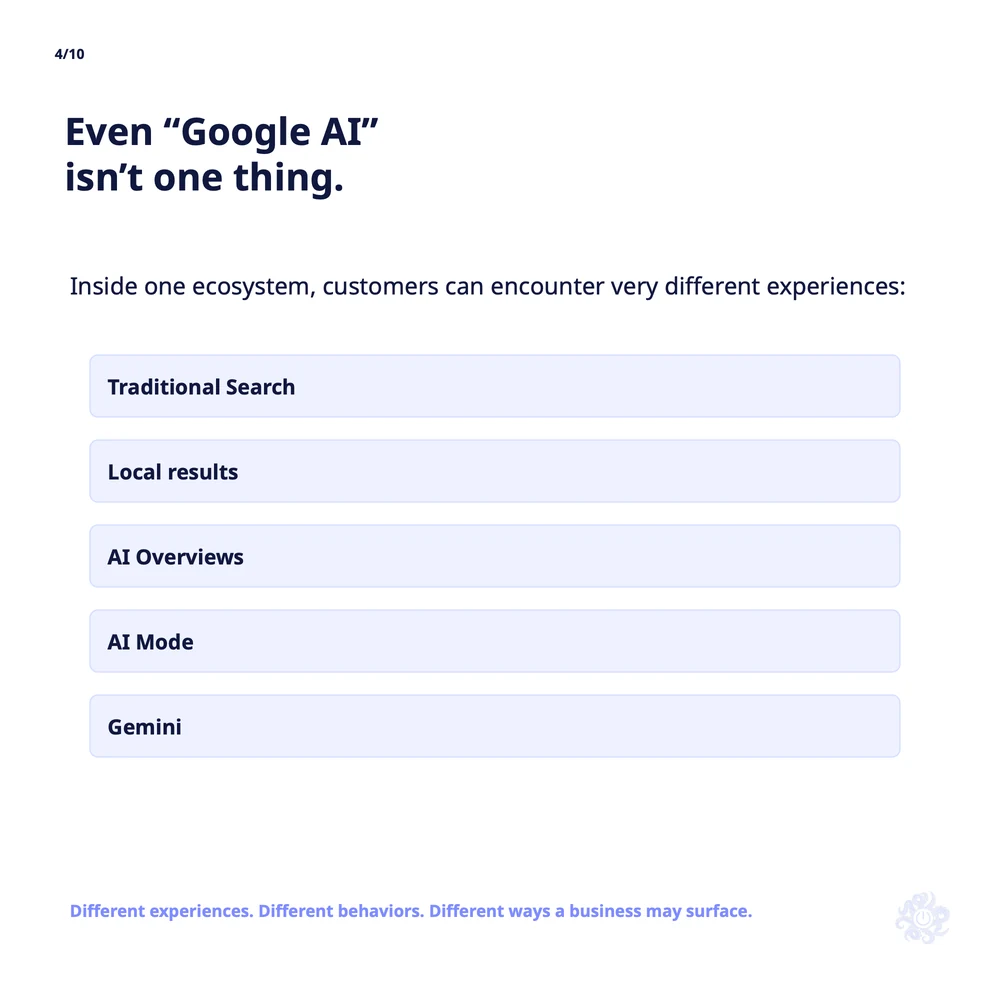
And even “Google AI” isn't one thing. Inside a single ecosystem, a customer can run into traditional search, local results, AI Overviews, AI Mode or Gemini. Different experiences, different behaviors, and different ways a business may surface.
From there, things get considerably more technical. Different platforms behave differently, and there's a lot more complexity than a single “AI visibility score” suggests.
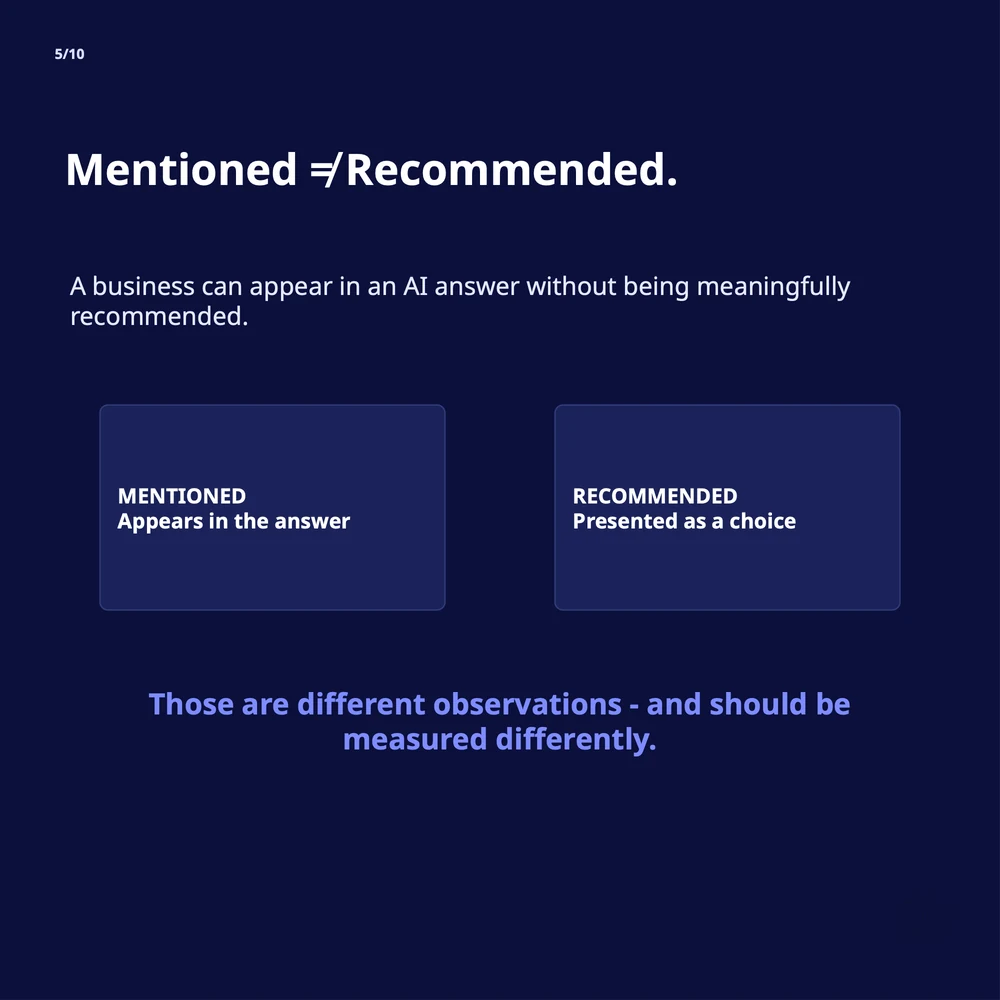
Start with this: being mentioned isn't the same as being recommended. A business can appear in an AI answer without being meaningfully recommended. Appearing in the answer and being presented as a choice are different observations, and they should be measured differently.
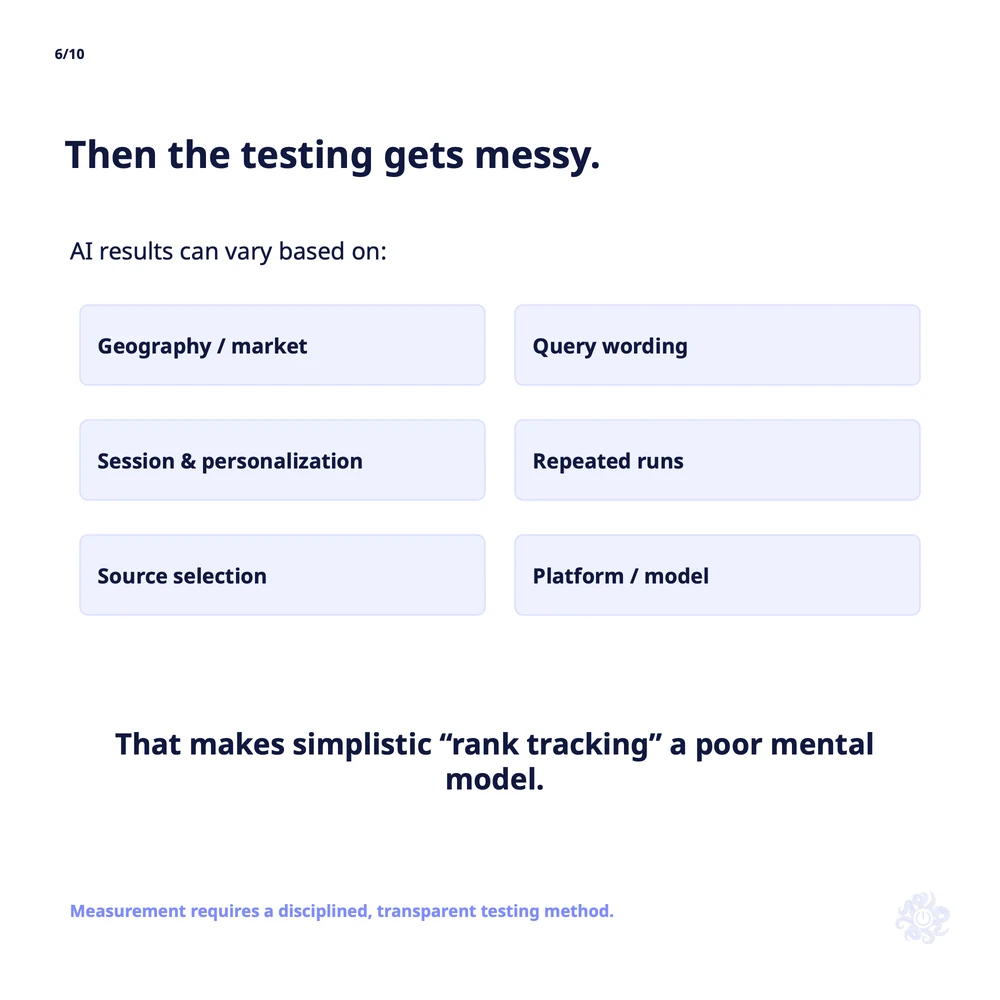
Then the testing itself gets messy. AI results can vary based on geography or market, query wording, session and personalization, repeated runs, source selection, and platform or model. That makes simplistic “rank tracking” a poor mental model. Measurement requires a disciplined, transparent testing method.
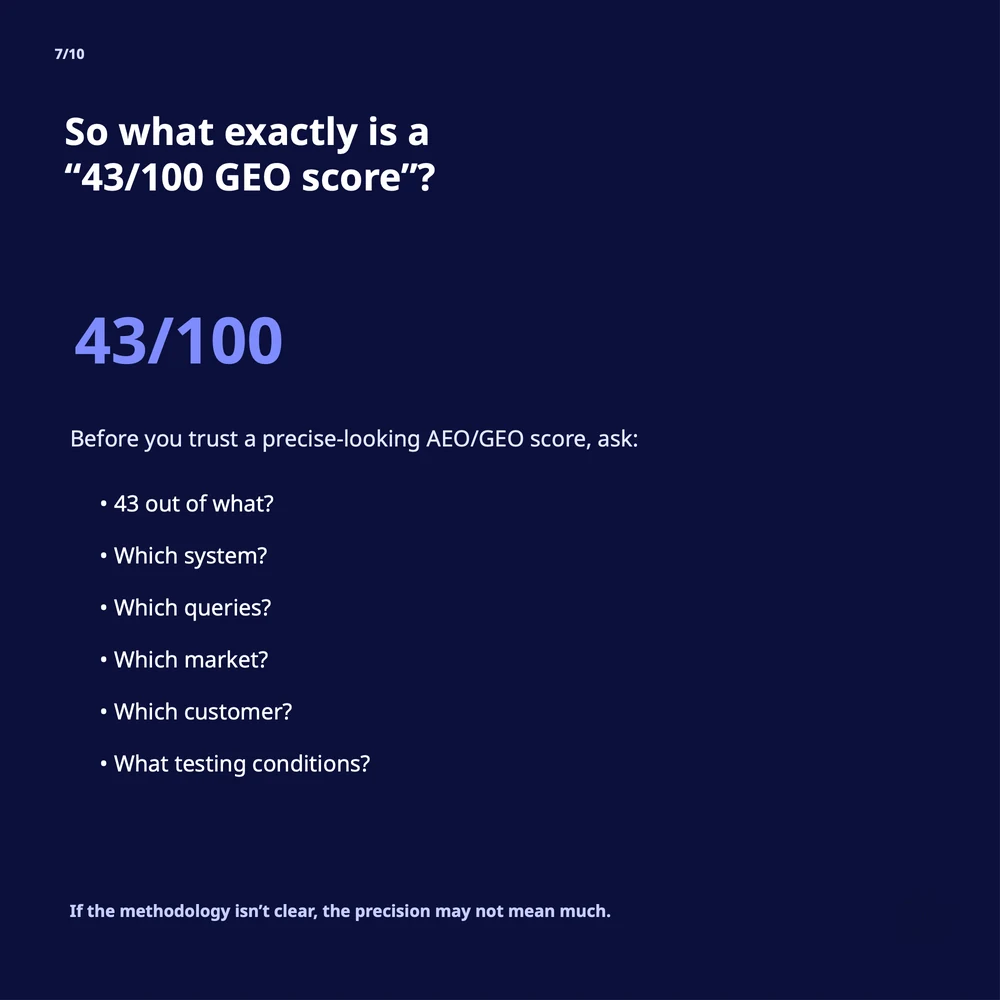
Some of the very precise-looking measurements being sold today deserve a few more questions about what, exactly, they measure. Picture a “43/100 GEO score.” Before you trust a number like that, ask:
43 out of what?
Which system?
Which queries?
Which market?
Which customer?
What testing conditions?
If the methodology isn't clear, the precision may not mean much.
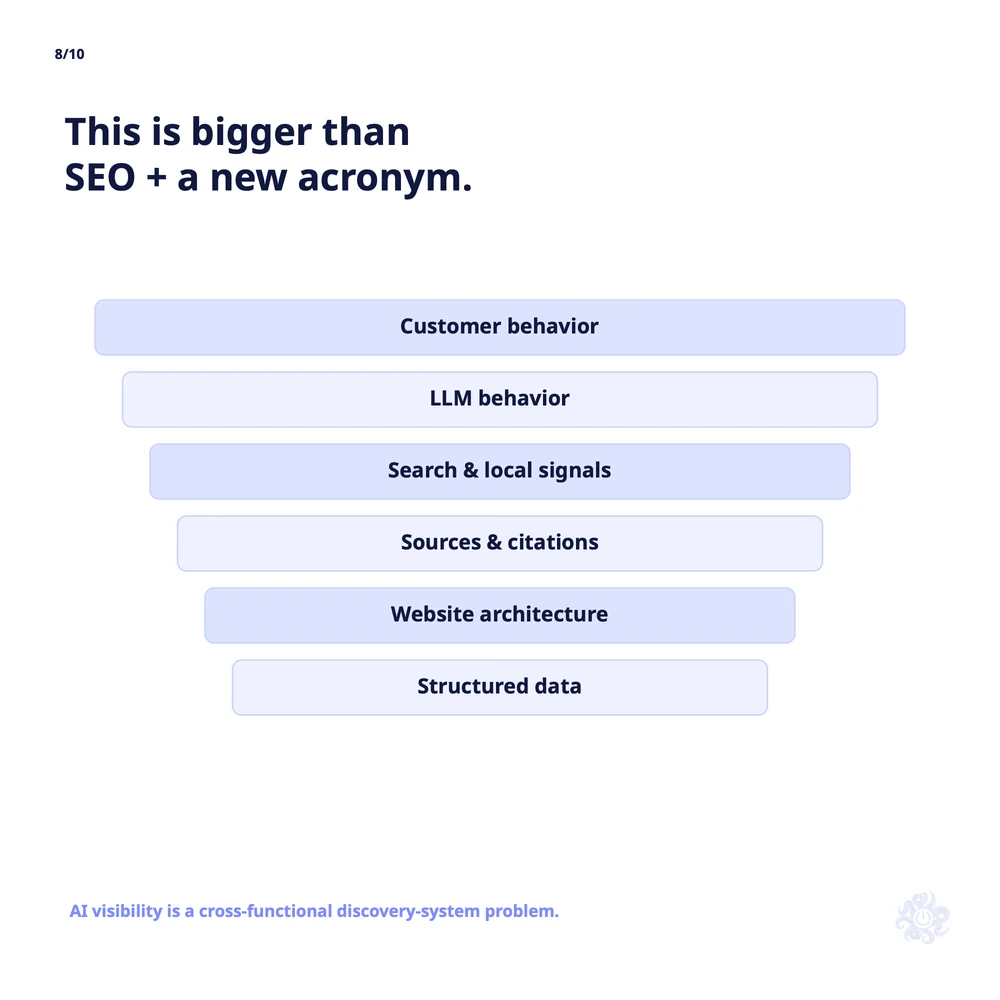
No, the real challenge is bigger than SEO. AI visibility touches customer behavior, LLM behavior, search and local signals, sources and citations, website architecture and structured data. It's a cross-functional discovery-system problem, which is why chasing a single score or a single tool usually misses the point. It's the same instinct behind figuring out whether a problem is technology, process, or AI before spending money on a fix: understand the system first.
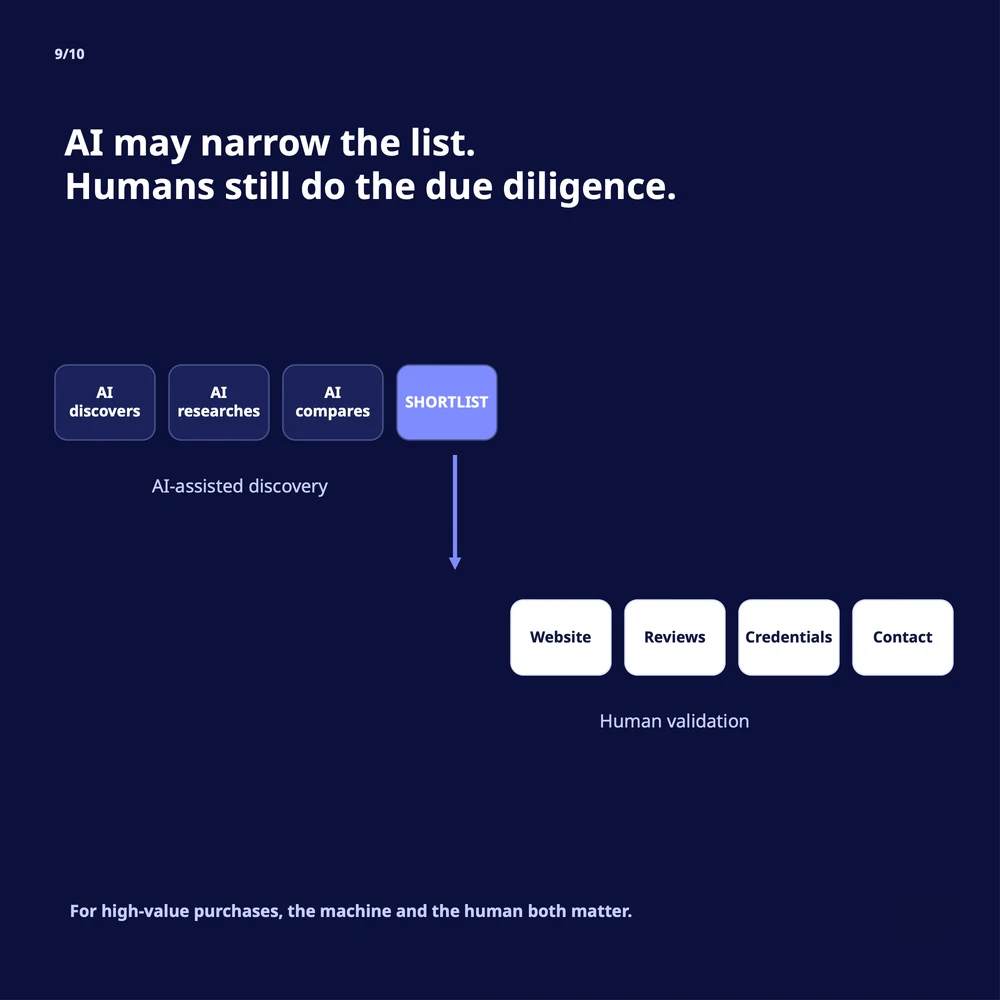
AI may narrow the list, but humans still do the due diligence. AI discovers, researches and compares businesses and produces a shortlist. Then a person checks your website, your reviews, your credentials and how to contact you.
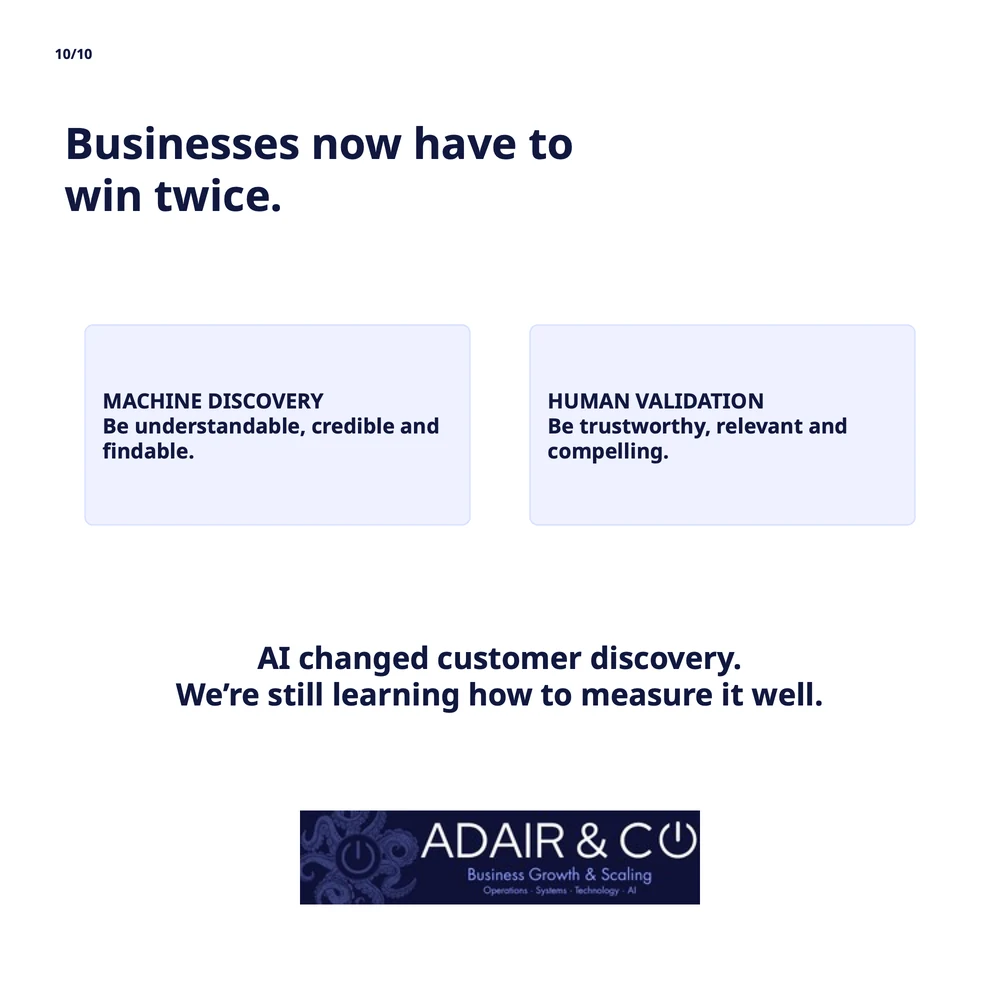
So businesses have to work for both machine discovery and human validation. For machines, that means being understandable, credible and findable. For people, it means being trustworthy, relevant and compelling. For high-value purchases, the machine and the human both matter.
The machine side is what my Local AI Visibility work focuses on: giving AI systems clear, consistent, credible evidence about who you are and what you do. The human side is everything a prospect finds once they click.
My biggest takeaway? We're still early. There are absolutely things businesses can do now to improve how they're discovered and understood by AI. But I think we should be very careful about pretending this ecosystem is more settled, predictable or measurable than it actually is.
Not until you can say what the number actually measures. Ask what it's out of, which AI system and queries were tested, which market and customer it reflects, and under what testing conditions. If the methodology isn't clear, the precision may not mean much.
Start with where your ideal customer actually begins discovery. If they're Google-first, understand Search, local results, AI Overviews and AI Mode. If they're LLM-first, start with the LLMs your ideal customer actually uses. Don't track ten platforms just because a dashboard can.
No. A business can appear in an AI answer without being meaningfully recommended. Appearing in the answer and being presented as a choice are different observations, and they should be measured differently.
For business owners, the goal isn't to chase the newest acronym. It's to understand how your customers are finding you now, and make sure you're positioned to be found as that behavior changes.
Adapted from my Practical AI for Business newsletter on Substack.
That's where Local AI Visibility starts — understanding how your customers actually look for businesses like yours, and giving AI systems clear, credible evidence about yours.